Ground-up development demands a totally different financial playbook than managing stable properties. Because builders deal with multi-year timelines and massive upfront capital, mastering these five financial pillars is the key to protecting your project’s margins.
Build a Solid Capital Stack
Before ground breaks, you must lock in your “capital stack”—the specific mix of sponsor equity, investor capital, and construction loans.
The Strategy:
Align your project milestones with your lender's *draw schedule. Construction funds are only released *after specific inspection milestones are met, so timing your cash needs perfectly is vital to keeping crews working.
Implement Project-Based Accounting
Standard business accounting won’t cut it on a job site. You need a dedicated system to track every dollar against specific project phases.
The Break Down:
Rigorously separate Hard Costs (tangible materials, labor, concrete) from Soft Cost (permits, architectural fees, insurance, legal).
Pro Tip:
Use precise cost codes for every invoice to spot budget overruns instantly before they cascade.
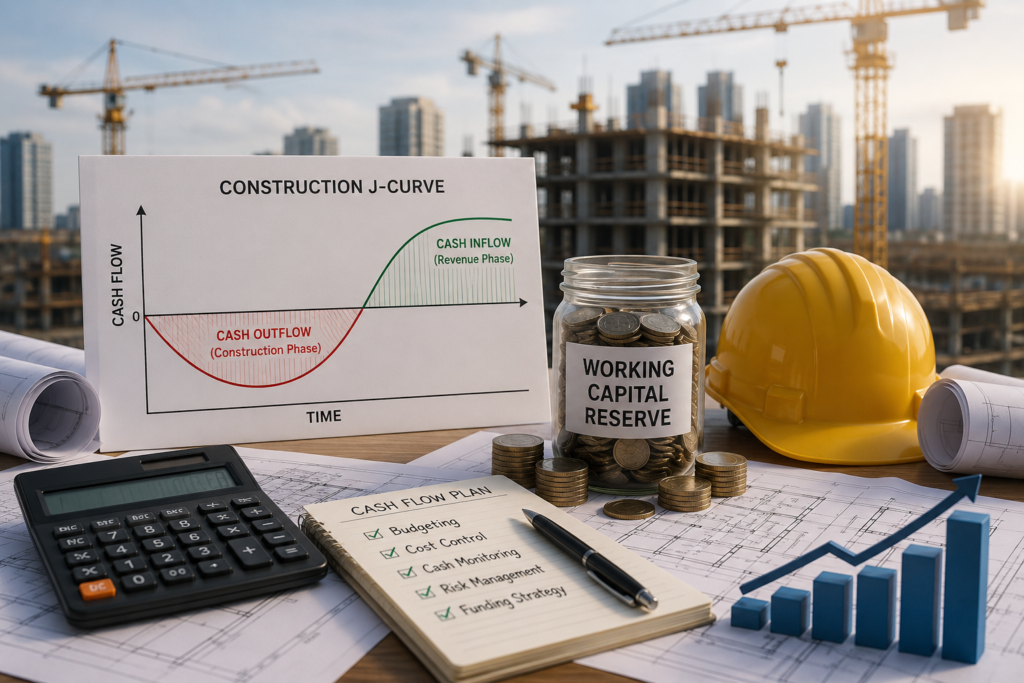
Survive the "Construction J-Curve"
Builders face a unique cash flow trap: massive cash outlays happen upfront, while revenue arrives entirely at the end
The Defense:
A project can be highly profitable on paper but still fail if cash runs dry on a Tuesday before a loan draw lands on Friday. Always maintain a dedicated working capital reserve (5% to 10% of the total budget) to bridge timing gaps.
Control Change Orders & Liens
Financial leakage on a job site usually happens through unmanaged field adjustments and paperwork gaps.
Change Orders:
Never allow structural or design changes on-site without written, priced approvals before the work begins.
Lien Waivers:
Secure a signed lien waiver from contractors before releasing milestone payments. This legally protects your property title from subcontractor claims.
Plan for Progressive Revenue Recognition
Because construction spans multiple tax years, calculating when you’ve legally “earned” money is highly sensitive.
The Method:
Utilize the *Percentage-of-Completion* method to recognize revenue progressively as construction advances, aligning your tax liabilities with actual physical progress rather than waiting for final unit sales.